
Helmet
Moves with your head; check both forward posture and head turns.
Choosing your setup
The mounting position shapes the record. Start there.
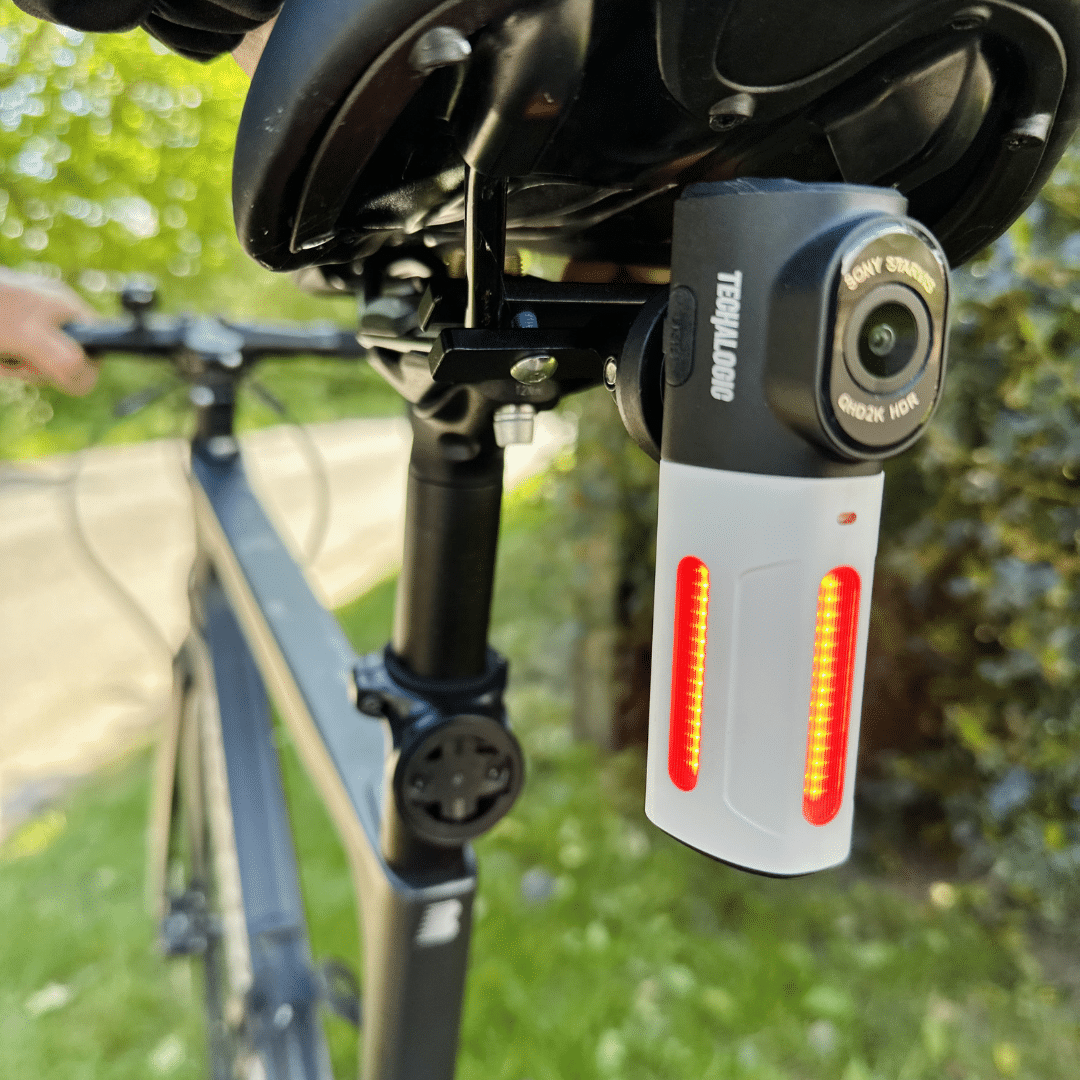
A helmet view follows your head. A bike view follows the mounting position on the bike.
Moves with your head; check both forward posture and head turns.
Stays with the bike; check cables, bags and mounting clearance.
Fit guidance, secure attachment and a test recording come first.
A helmet-mounted camera turns as you look around. That can record something you turn towards, while also moving the view away from the direction of travel.
Check the angle in your normal riding position. HC-1 records forward; DC-1 and DC-2 Pro record front and rear. With two lenses, both ends need a useful, unobstructed view.
A bike-mounted camera stays aligned with its fitting on the bike. That gives a different perspective from a camera that follows your head.
LC-2 Pro combines rear recording with an LED light. Check the lens and light are clear of luggage, clothing and the rear wheel, including when the bike is loaded for your usual ride.
Helmet mounting means considering weight, hat or helmet guidance and how you remove the camera. Bike mounting means considering available space, fittings and what happens when you leave the bike.
Neither position is automatically right for every rider. Choose around the view you need and the setup you can fit, charge and check consistently.
Check compatibility with the helmet or bike manufacturer and follow the mounting instructions. Once fitted, record a short clip from your normal riding posture.
Look for a level view and anything blocking the lens. If you use two lenses, check both recordings. Repeat the check after changing the mount, clothing or luggage.
A reliable record of what happens around you.
Holme Road Offices, Holme Road, Yaxley
Cambridgeshire, United Kingdom, PE7 3NA
© 2026 Techalogic. Practical rider safety technology.